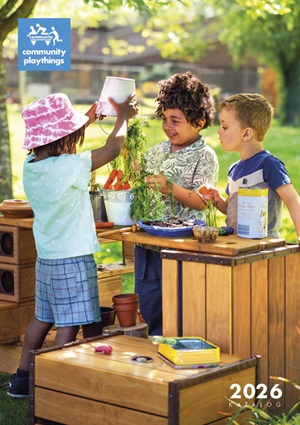
Let the outdoors be your classroom
Helping learning come alive outside
| August 2026As Head of Early Years at Fennies Nurseries, I’ve always believed that some of the most beneficial and fun learning happens beyond the four walls of a classroom. My name is Eleanor Richfield, and in my years working with young children, I’ve witnessed countless moments where children embrace their curiosity and creativity while exploring the outdoors.
The benefits of playing and learning outdoors are well documented. So much goes into outdoor learning, and in our evolving pedagogy, we view nature as one of the most meaningful places where learning can thrive. In this article, I want to explore the power of outdoor learning, why it’s so pivotal in young children’s development and how you can make it an everyday part of your early years practice.

Why outdoor learning matters
Outdoor learning is a great way to bring tangible cognitive, social, physical and mental benefits to children and support future life skills.
Maria Montessori emphasised the importance of nature in a child’s education, and her quotes reflect this belief. “There is no description, no image in any book that is capable of replacing the sight of real trees, and all the life to be found around them, in a real forest.”
One of the seven key areas of learning in the EYFS is physical development, which helps form the foundation for their future health and physical abilities. Using the outdoors as much as possible helps children develop physically, improving both their gross motor and fine motor skills.
At Fennies, we see this come to life every day. In one of our toddler rooms, practitioners regularly set up a “woodland obstacle trail” in the garden, a straightforward course of wooden stepping logs, low balance beams and ramps made from planks and blocks. Children navigate the trail at their own pace, building the core strength, balance and spatial awareness that underpin later physical confidence. What begins as play becomes purposeful: a two-year-old who started by crawling across the balance beam is, within weeks, walking it with arms outstretched, beaming with pride. These are the gross motor milestones the EYFS calls for, but experienced by children as pure adventure.
But that’s not all. There is ample opportunity for children to grow cognitively and outdoor environments are very effective for this. Outdoor activities help improve children’s cognitive function, focus, and problem-solving abilities by providing real-world contexts for everyday learning.

Bringing science to life
Early years educators understand that children often learn best through movement, interactions and play, and the research in neuroscience backs this up. The frontal cortex, which is responsible for controlling emotions and problem solving, is activated during playtime. The experience of playing forces the brain to make those neurotransmitter connections that are critical to a child's development.
By the age of five, the brain has developed around 90% of its architecture, with over one million neural connections forming every second in the early years. These connections strengthen through repeated experiences, particularly those that are active, sensory-rich and emotionally meaningful.
Outdoor sensory activities also help build motor skills and encourage creativity, all while providing a natural way to engage the senses in a low-stress environment.
We witnessed this beautifully with one of our children who found busy, indoor environments overwhelming and often became dysregulated before the morning was out. His key person began taking him outside first thing each day, before the session was in full swing. Together they would sit on a wooden bench, listening to the birds, feeling the texture of the bark, watching clouds pass overhead. Within a few weeks, his settling time shortened noticeably and his capacity to engage with group activities improved. The outdoors had given him a sensory anchor, a way to arrive in his body before the demands of the day began. His parents told us it was the first time he had come home from nursery calm.
Research also shows that time in nature can reduce stress hormones and support emotional regulation. When children move freely outdoors, they get a chance to release any built-up energy they have which helps to regulate their emotions more effectively.

The magic of “walk and wonder”
Some of the most meaningful outdoor learning happens not through structured activities, but through what we call “walk and wonder.”
I remember one autumn morning, walking with a small group of three-year-olds through the garden at one of our nurseries. One little girl stopped almost immediately, crouching down to the ground without a word. I followed her gaze and saw a line of ants moving steadily along the edge of the path, carrying crumbs twice their size. She watched, completely still, for almost four minutes. Then she looked up at me and said, “They’re working together.” In that single, unhurried moment, one that no planned activity could have engineered, she had observed, made meaning and drawn a conclusion about collaboration. That is the quiet power of walk and wonder.
Outdoor learning is where the curriculum grows naturally from children’s curiosity.

Practical tips to make outdoor learning work
As much as local parks can make these opportunities more accessible, they are definitely not a necessity! Here are some ideas you could use to enhance your outdoor learning:
- Follow children’s curiosity: Let their interests guide your activities. If they’re fascinated by bugs, explore habitats and create a simple observation journal.
- Create time to meander: Build unhurried time into the day for children to wander and explore.
- Integrate learning across subjects: Counting leaves or measuring rainfall can help combine numeracy and scientific concepts in authentic ways.
- Embrace risks & challenges: Encourage safe risk-taking. Climbing, balancing or navigating uneven ground builds confidence and motor skills.
- Remain consistent: Even short daily sessions outdoors make a huge difference.
- Reflect & extend: After outdoor sessions, gather children together to talk about what they observed or discovered. This reinforces language skills and critical thinking.
Overcoming common challenges
At Fennies, come rain or shine, the outdoors is an essential part of our day, and we embrace every season.
In reality, the changing seasons allow us to provide different outdoor opportunities for the children. All it takes is a little preparation to make the tricky weather more manageable. For example, during the cold winter months, waterproof jackets and layers are non-negotiables. In the warmer weather, always come equipped sun lotion and light clothing.
By also setting out clear boundaries and expectations when learning in outside environments, the children can learn safely while also having the freedom to explore themselves. As we know, sometimes the best learning happens in unexpected ways when we let children take the lead.

A final thought
When I see children return inside from exploring the outdoors, I can see their imaginations ignited with curiosity and their eyes full of wonder. That’s the essence of effective Early Years education, helping children to discover the world through their own eyes.
If there is one simple change that can transform early years practice, it is this…
Let the outdoors become part of the everyday classroom, in all types of weather, all year round. You will help nurture curious and resilient children ready to explore the world!