Speak, play, learn
A conversation on the importance of role play and oracy
| April 2026How do you think we could be implementing language skills better in our settings?
Language is a significant area of development across schools. From what I’ve seen, early years and key stage one settings have the opportunity for the biggest impact. Across the educational landscape, I would wish we could see this being implemented in a more intentional and purposeful way. An oracy framework that could give us guidance would be very helpful, as children’s language skills vary a lot. Children who have English as an additional language may not develop the skills they need to be able to access the curriculum, and could really benefit from early identification and intervention. Other children have low language levels simply because of their background, or because they haven’t been exposed to language.

In an early years setting, what does a language-rich environment look like, and what scaffolding would you provide to build oracy?
To start with, you can open up communication by speaking to children, and expecting a response. Encourage talk by asking open-ended questions and then extend and explore these conversations. Expose children to new and unfamiliar words by reading or doing new activities. Arguably, the best way is through storytelling, because you initiate a love of reading and ignite imagination and curiosity. And when children are curious, they go looking. They want to find things out for themselves.
Role play is another example of a language-rich environment. It differs from a didactic approach where the children are just talked at and there is no opportunity for the child to explain, reflect or practice listening. In role play, children have to actively listen, onboard information and communicate back. You give them an opportunity to deepen their learning because the more they articulate it, the more it internalises. It’s the science of learning.

Role play provides the opportunity to take on a character. You have to become someone you’re not which requires the skills of intelligence, empathy and imagination. You have to adopt the personality, intonation and skills of the character and suddenly, the child is using all these different aspects of communication. Children study these different characters in their lives like firemen, nurses, or dads and mums, and then they recreate them. It’s cognitive work for the brain. When you think about self-regulation, the main strategy teachers and counsellors have is talking therapy. It doesn’t surprise me that there is research now that connects role play with self-regulation.
What can practitioners do to ensure there are opportunities for role play?
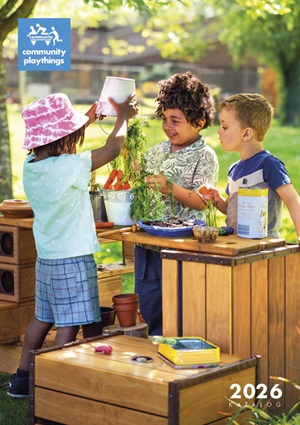
Giving children stories is the first step, so they have characters they can be familiar with. Then they need the tools. In your classroom environment you should have equipment that imitates the real world: kitchens, wardrobes, etc. We can’t expect children to engage in role play unless we set the scene. Teachers are very much directors in that sense; we have to give children the first clues so they can go looking. You can be as creative as you want in the nursery – if a child doesn’t have the exact utensils they need to be a doctor, then a spatula or spoon will do for an operation!
Explore Kitchen Islands for role play

What are the skills that children develop during role play?
Children develop skills that they’ll use throughout life. Later in school, the idea of learning becomes more about remembering facts and figures. But in role play, they learn to not talk all the time, but to listen as well. They have to work as a team, and communication skills are essential. Children create scenarios where they need to problem-solve and think critically, and to do this they need to articulate and clearly express themselves. They’re naturally developing metacognition – where they think about and consider their responses. Role play is a perfect place for this to happen. Creativity in itself is a skill that needs working on and nurturing; if it’s not harnessed it gets lost. As teachers and practitioners, we have a big responsibility in setting up the environment to nurture this. If you think about it, role play takes a lot of brain power. You have to put yourself in the shoes of your character, imagine what they would say and how they would solve a particular problem. Children are developing so many skills, and they are all as important as each other. It’s not just about oracy.

You mentioned that older children are often taught using a more didactic approach. What can you tell us about play-based learning and extending that further up the curriculum?
When you look at the educational landscape, what you tend to see is a curriculum focus on facts and topics. What is often missed is the application of skills and knowledge, whereas in play-based learning in early years it’s the other way around, you’re applying it first, and then you establish the facts. When the environment is arranged right, you pick up maths, literacy and science through play. Later on, children learn facts, say, about the sun and the rain but they never have a chance to see it, feel it or experience it in a way they can relate to. It’s just a concept that they have to memorise for an exam at the end of the year.
We need to introduce subjects in a way that children can see it for themselves, internalise it, and apply the knowledge in their daily routine. Early years and key stage one does this, but then it gets lost. Take for example a simple writing exercise, ‘describe how you make your bed’. I work with children now in the UAE who have never experienced this, so they do not have the vocabulary for it. If we started with the practical experience of making a bed and talking through it, how much more would they understand the method and process, and be able to write about it? Some school leaders are doing this, but imagine if it was statutory!

Emmanuel, if you were speaking to practitioners, what are some practical steps they can take to encourage role play in their setting? And what take-home message would you give them about nurturing early language skills?
For teachers who are hoping to encourage role play, I would suggest using stories as a simple way of introducing the concept. Read stories, discuss the characters and the setting, and ask children to simply reenact a scene from the story. I would model to them how to do this with another member of staff and even use sentence stems and key vocabulary. This requires many attempts initially, but with consistency and practice, the students will slowly grasp the concept. For the younger years, stories are very important, but stations and visible locations that mirror real-life situations are also key, (for example, a kitchen, a hospital, a shop and so forth.) You can always discuss key figures and their roles at home or society before letting the children role play scenarios.
Nurturing language skills is incredibly important in both the social and academic development and growth of students. The more children are exposed to language, the better their communication and the better they are at orally expressing themselves. This forms the basis of reading and writing, and its role in deepening learning should not be underestimated. Early communication skills naturally progress to basic communication skills. Children with poor language skills become increasingly vulnerable in a world where our voice is a vehicle for growth, self-preservation, relationships and empowerment.
Ultimately, language and communication must be intentionally nurtured from the earliest stages through meaningful interactions and opportunities for role play. When we prioritise oracy in this way, we equip children not just for academic success, but for confident participation in the world around them.