Self-regulation spaces in early education
Why do safe spaces matter for young children?
All forms of information arrive through our senses, and the way that we process this input and respond to our environment is highly individualised. From the first moment of the day, children are exposed to constant stimulation which makes demands on their attention, emotions, and space. How much input can a child comfortably manage?
This is why it is essential to provide a safe, quiet space where a child can pause, self-regulate, and regain the confidence to re-engage. In this video, parents and practitioners relate how the Nook created a meaningful difference at RAFAKidz, Brize Norton.
What is needed for self-regulation?
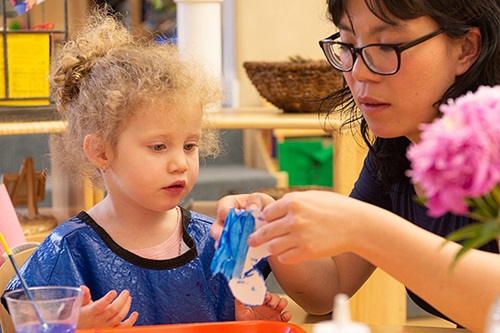
Strong connections, or attachments with a nurturing adult empower a child to step out beyond their comfort zone and navigate challenges (Bowlby, 1988). This lays the cornerstone for later self-regulation, a precondition for engagement, thinking and memory.
How do attachment and co-regulation happen in your classroom? Are there spaces where children can connect with a caring adult, with their peers or with their own emotions? In this video, Neuroinclusion Advisor Emma Weaver explains the neuroscience linking attachment, future learning and the importance of co-regulation spaces.
How Nooks can help with self-regulation in your space
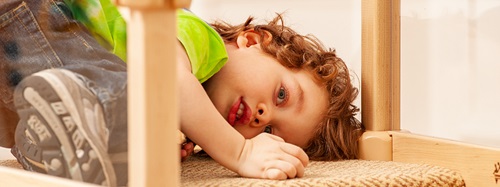
What is a Nook? Placed within your classroom's calm corner, a Nook is a dedicated space where children can self-regulate, free from external pressure or judgement.
Designed as a place of calm, Nooks:
- Minimise sensory overload by blocking visual distractions, reducing noise, and softening the lighting environment.
- Support safety and emotional security with a sturdy, enclosed form that helps children feel contained and protected.
- Encourage calm through gentle curves and natural colours that mirrors the tones of the outdoors, helping reduce visual stress.
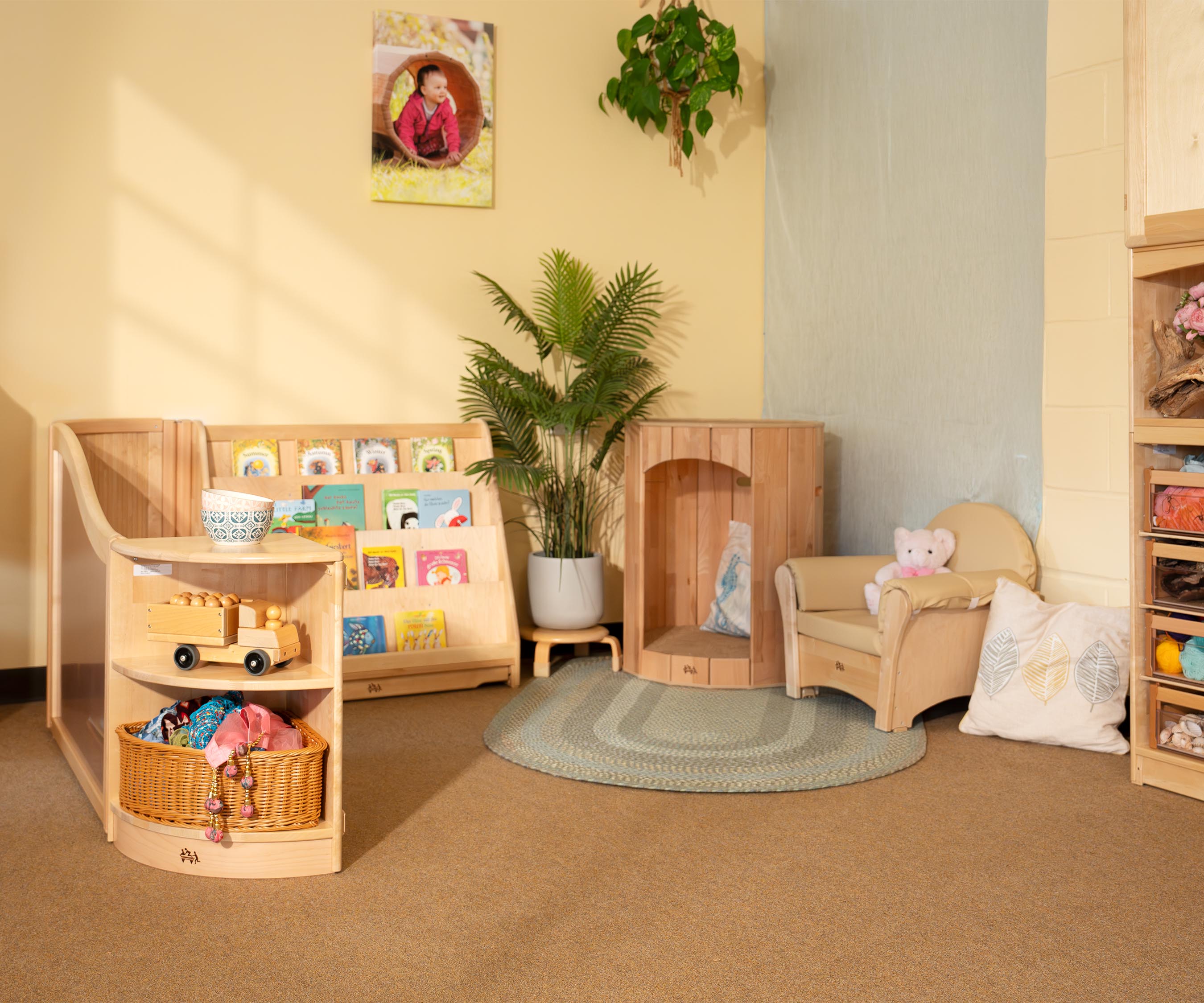
The Hollow Nook is small and moveable, allowing you to explore different arrangements.
Products for your classroom's calm corner


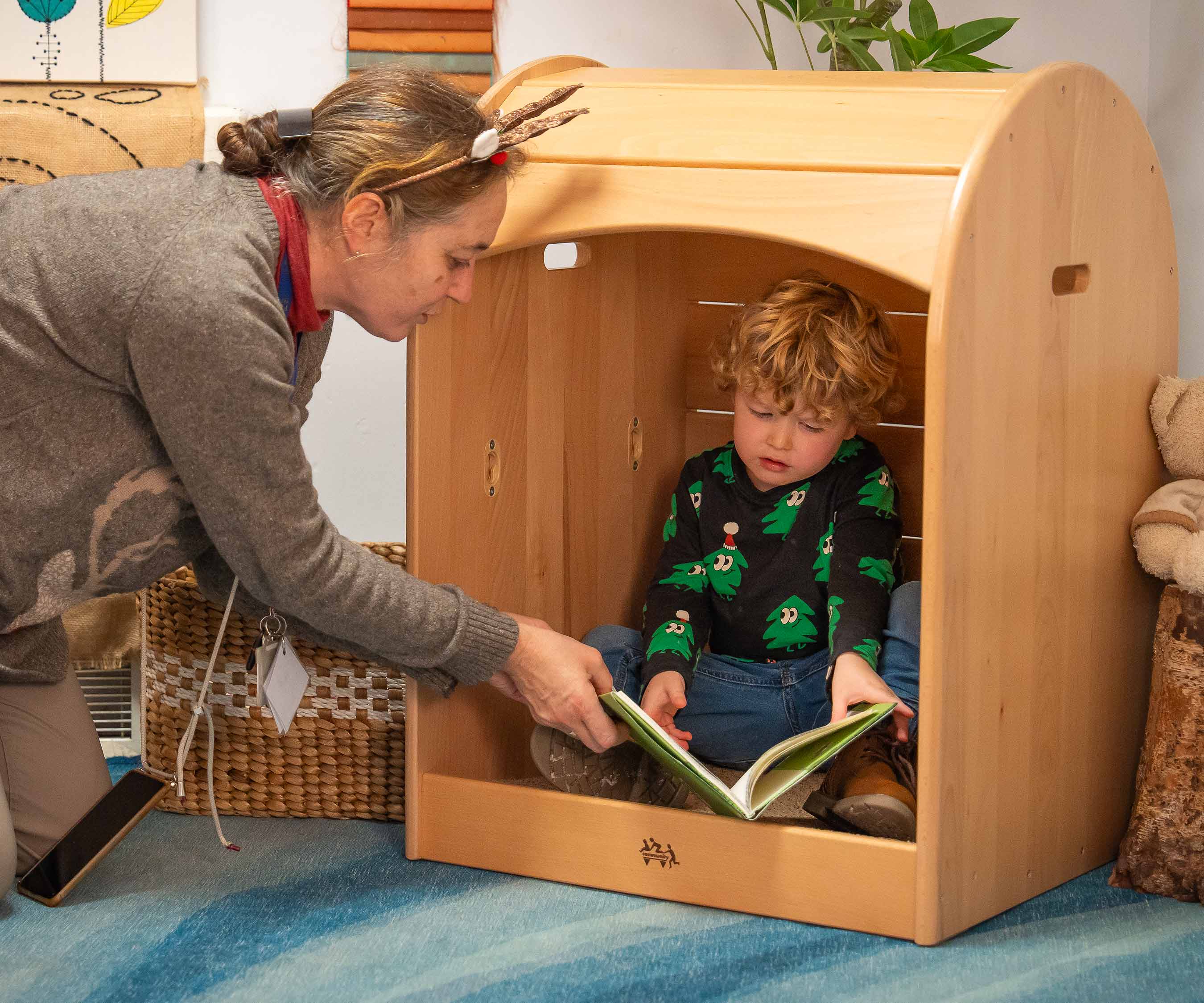
What is the educator’s role?
Big emotions can be challenging for young children to navigate, and supporting them during difficult moments can be exhausting for everyone involved. A calm corner in your classroom gives children a safe place to manage their emotions.
By accompanying a child to this safe space, validating their feelings, and guiding them through their emotions, educators can help children develop critical self-regulation and social-emotional skills. In inclusive classrooms, calm corners become a vital component of the universal learning space, empowering children to address their emotions in a way that respects their individuality. Calm corners foster a sense of belonging and community.
“A designated sensory or break-out room off the main classroom has obvious benefits, but it is also possible to recreate a place of retreat within the classroom itself.
This space should be calm and removed from the hustle and bustle of the room to support a child’s self-regulation. The child can access this area on their own or with adult support to co-regulate. Having this space within the classroom allows practitioners to respond to individual needs more readily without impacting staffing ratios. It also enables children to access the space freely throughout the day, and practitioners can recognise when a child may need a sensory break and direct them toward it.
Some children may need time and space on their own without adult intervention, and having a place of escape within the classroom can provide this while maintaining high levels of safety and supervision.”
This space should be calm and removed from the hustle and bustle of the room to support a child’s self-regulation. The child can access this area on their own or with adult support to co-regulate. Having this space within the classroom allows practitioners to respond to individual needs more readily without impacting staffing ratios. It also enables children to access the space freely throughout the day, and practitioners can recognise when a child may need a sensory break and direct them toward it.
Some children may need time and space on their own without adult intervention, and having a place of escape within the classroom can provide this while maintaining high levels of safety and supervision.”
– Hannah McCormack M.A.
Further reading




References
Bowlby, J., 1988. A Secure Base: Parent-Child Attachment and Healthy Human Development.