It's a matter of time
A reflection on the five essentials of childhood
| December 2025After 45 years in education, I’ve learned a great deal. However, there’s still so much I’m trying to understand, especially when it comes to what truly matters in childhood. What are the elements that shape a child’s development, happiness, and lifelong learning? I’m Neil Griffiths, educator and author, and these are my reflections on the essentials of childhood – the simple, powerful things that help children thrive both in school and beyond.

From pupil to practitioner
I was educated in a time when it was entirely possible (and in my case, likely!) to fail the 11-plus, leave school at 15 (though I didn’t), and face the dual challenge of both CSEs and O Levels. Looking back, I realise my entire schooling happened in rows of desks, and I spent much of it vying for a seat next to Charlie Moore, the brightest kid in the class, hoping for a quick glance at the answers I struggled to find.
I began teaching in 1978, just as the baffling Initial Teaching Alphabet (I.T.A.) spelling system was introduced. But amid the confusion, I discovered a love for Unifix cubes and the vividly coloured Cuisenaire rods, which I used whenever possible across all subjects.
So, to find myself still in the system now guarantees I have experienced many changes, amendments, reforms, and U-turns. Many of these changes have been good, and have responded to an ever-changing world; in many ways, children today are getting a fuller education than I did.
But despite this, all is not well.
It’s a matter of time
Nearly every educational setting I visit shares a common frustration: the desire for stronger support from home, and the challenge of engaging parents who struggle to find the time their children truly need.
I firmly believe that parents are a child’s first and most lasting educators. If we want school and home to work more effectively together, we must move away from the idea that education is handed over entirely to teachers once a child starts school. Instead, we need to clearly and consistently communicate to families that we are partners in their child’s learning journey; we need to collaborate with a mutual respect and shared responsibility well into our children’s adolescence.
But let’s be honest. None of this is easy. In today’s fast-paced, high-pressure world, both living and working with children comes with real challenges. However, we chose this path, and despite the demands, it remains one of the most meaningful and rewarding journeys we can take.

We see far too many children today arriving in the education system with challenging behaviour, poor social and interpersonal skills, a lack of ability to concentrate, and with limited vocabulary. The truth is that children’s readiness for school has been gradually declining for many years.
If we’re to reverse this decline, we need to take a long, honest look at the world we’re preparing children for. While we must acknowledge its constant evolution, we must also hold on to the timeless truths that should never change.
As an Education Consultant working internationally, I’m often asked by concerned parents and educators alike, “What does a young child need most in their early years? What will help us better prepare our children?” My answer is always immediate and emphatic: time.
Naturally, the follow-up question is, “Time for what?”
And my response is just as passionate: Time for the five essentials.
The five essentials
So what are the five essentials? They are: giving children time to play, time to talk, time to listen, time to be read to, and time to do stuff!
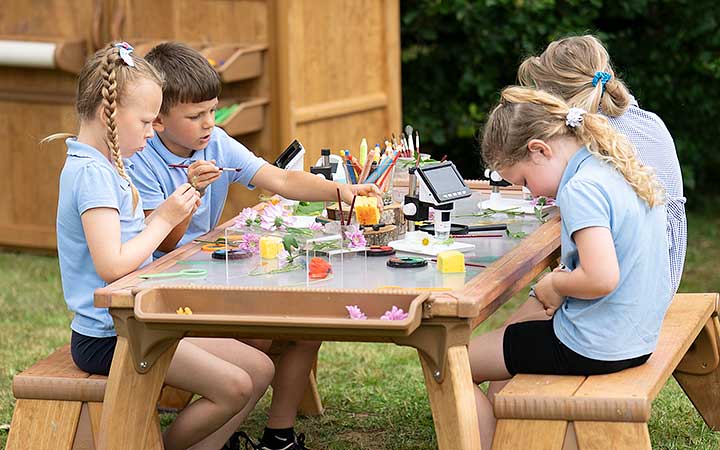
Of course, children also need love, security, nourishing food, and warm clothes, but the above-mentioned five essentials are foundational for their emotional, social, physical, and cognitive development.
Giving children time to play, talk, listen, and do is essential for their overall development. These simple, everyday experiences build the foundation for communication, creativity, problem-solving, and emotional intelligence. Through play and hands-on activity, children make sense of the world; through talking and listening, they develop relationships and language. Together, these essentials nurture confident, curious learners who are ready to thrive – in school and in life.
Giving children time to “do stuff” means giving them the freedom to explore, create, and take part in real, hands-on experiences. Whether they’re building, baking, planting, or fixing, these moments help develop practical skills, confidence, and a sense of independence. Doing things for themselves nurtures curiosity, supports problem-solving, and allows children to see the impact of their actions. All these skills are essential for lifelong learning!
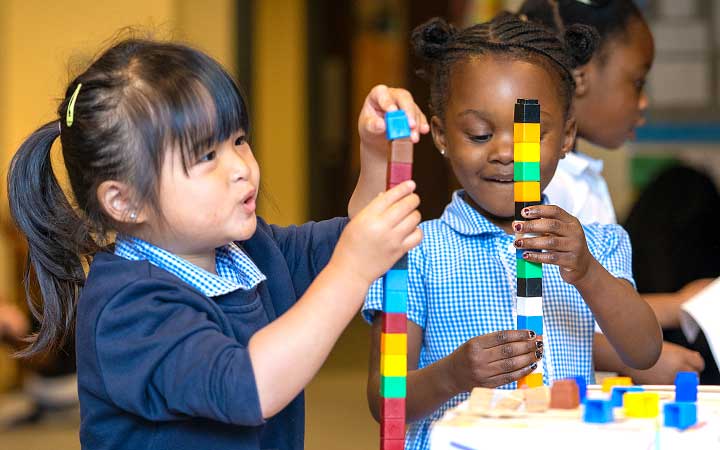
It’s reassuring to see how naturally the five essentials intertwine. Through play, which so often involves doing, creating, and discovering, children and adults are drawn into conversation, sharing stories and listening closely to one another. Together, these elements offer rich opportunities for movement, connection, self-expression, exploration, and problem-solving. Yes, they require time – but without a doubt, it will be time that shapes children’s lives for the better.
The most important essential?
If I had to choose what was my favourite of the five essentials, I think I would choose my life-long passion: reading aloud to children. Throughout my professional career I have never missed the opportunity to promote the importance of helping a child develop a love of reading. This again takes time, and depends heavily on schools and families working together in partnership.
Research consistently shows that children who develop a love of reading early in life tend to have stronger language skills, a richer understanding of the world, and greater emotional wellbeing. And of course, they also get to experience the pure joy that reading brings.
The support children need from adults isn’t complicated or burdensome. In fact, the most effective starting point is simple: children who love reading almost always come from homes where others read too. Whether at home or in school, adults must be visible role models. So pick up a book, be seen reading, and share your enthusiasm for it at every opportunity!
Reading aloud naturally weaves together the other essentials of early childhood. It sparks conversation, encouraging children to talk, listen, and ask questions. Stories invite play, imagination, and creativity, often leading to hands-on activities inspired by what they've heard.
In conclusion
The five essentials are simple yet powerful, laying the foundation for confident learners. They don’t require expensive resources – just attention, presence, and partnership between home and school. If we can protect and prioritise these experiences, we give children the very best chance to thrive, not just in school, but throughout their lives. We can reverse the worrying trend of children lacking in social and behavioural skills.
Benjamin Franklin once said: “Lost time is never found again!” Don’t miss out on the precious, exciting opportunity that is childhood. It’s a matter of time!