Nature and discovery
BiopheliaNurturing children's biophilia
Randy White & Vicki L. Stoecklin
When it comes to environmental
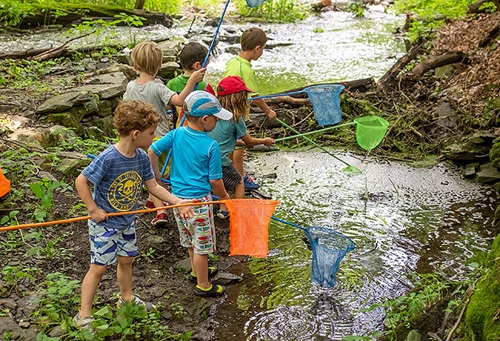
education, the best learning environments are informal and naturalistic outdoor nature-scapes where children have unmediated opportunities for adventure and self-initiated play, exploration and discovery.
kids in a treeExploration of nature: Critical to child development
Helen Huleatt
All children are eager to connect with nature; given a chance, they develop a strong love for the earth and everything upon it. Their senses are wide open to the great and the small – as children watch moon and stars, they are awed to catch a glimpse of our planet’s place in the universe, while tiny creatures and objects grip their imaginations too.
Activities
bark boat Bark Boat
Make a simple little boat with a leaf sail. Take a trip to your playground and collect lots of leaves, twigs and pieces of bark.
bird feedersBird feeders
Winter is the best time to feed the birds. Here are a few ideas of how you can construct your own simple feeders to hang on a tree near your window. Then watch the fun as your feathered friends come to feast!
Grass in a pan Grass in a pan
Have you ever tried planting real grass indoors? I do this with my Kindergarten class every year and it’s one of our most exciting projects. Seeing the first green grass of spring is always exciting. And to plant it yourself and watch it grow—that’s even better!